
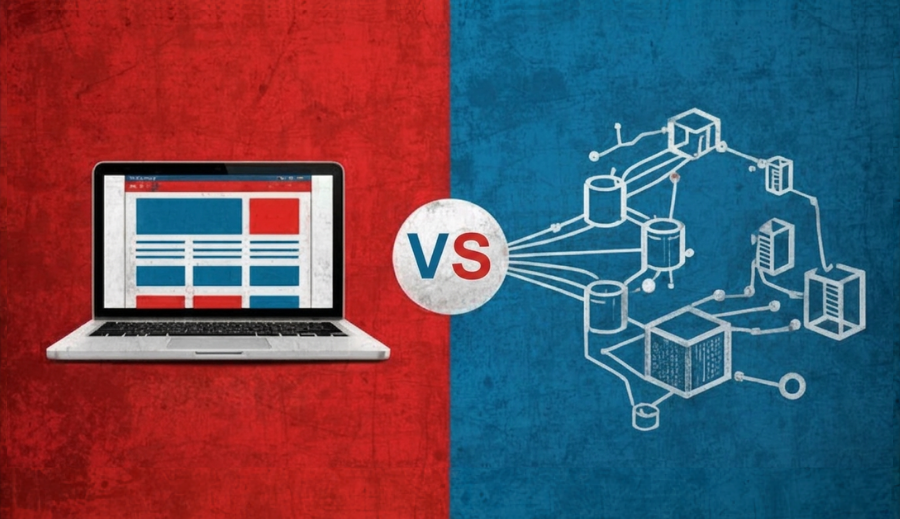
In today’s digital-first world, having an online presence is no longer optional but it’s essential. However, when it comes to building that presence, many businesses face a critical question: Should you go for a website or a web application?
While the two terms are often used interchangeably, they serve very different purposes. Choosing the right one can directly impact your user experience, scalability, and overall business growth.
– Understanding the Basics
1. What is a Website?
A website is typically a collection of publicly accessible pages designed to provide information. Think of it as your digital storefront or brochure.
Common examples include:
- Company profiles
- Portfolio sites
- Blogs
- News platforms
Websites are usually content-driven, meaning users visit to read, learn, or explore. Interaction is minimal except maybe filling out a contact form or subscribing to a newsletter.
2. What is a Web Application?
A web application, on the other hand, is interactive and function-driven. It allows users to perform specific tasks and often requires user input or authentication.
Examples include:
- Online banking systems
- E-commerce platforms
- Project management tools
- Social media platforms
Web applications are dynamic, meaning the content changes based on user actions.
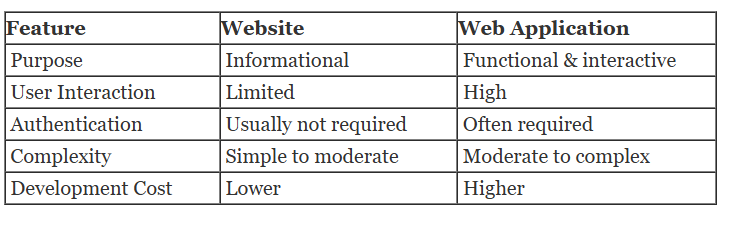
– Website vs. Web Application: Key Differences at a Glance
– How to Choose the Right One for Your Business
Choosing between a website and a web application depends on your business goals, target audience, and the type of experience you want to deliver.
1. Define Your Objective
If your goal is to inform, showcase, or promote, a website is usually enough.
If you want users to interact, transact, or perform tasks, you’ll need a web application.
2. Consider User Interaction
Ask yourself:
- Do users need to log in?
- Will they perform actions like booking, buying, or managing data?
If yes, you’re leaning toward a web application.
3. Think About Scalability
Web applications are built to grow with your business. If you plan to expand features over time, like adding dashboards, user accounts, or automation, a web app is a better long-term investment.
4. Budget and Timeline
Websites are quicker and more cost-effective to build.
Web applications require more time, planning, and resources. But they deliver higher functionality.
5. Hybrid Approach (Best of Both Worlds)
Many modern businesses combine both:
- A website for marketing and brand presence
- A web application for core services
For example, an e-commerce brand may have a marketing website and a separate app for user accounts and purchases.
– Final Thoughts
There’s no one-size-fits-all answer. The right choice depends on what your business needs today and where you want it to go tomorrow.
If your goal is visibility, start with a website.
If your goal is functionality and engagement, invest in a web application.
And if you’re aiming for growth, combining both could be your winning strategy.
Your digital presence isn’t just about being online. It’s about creating the right experience. Choose wisely.