
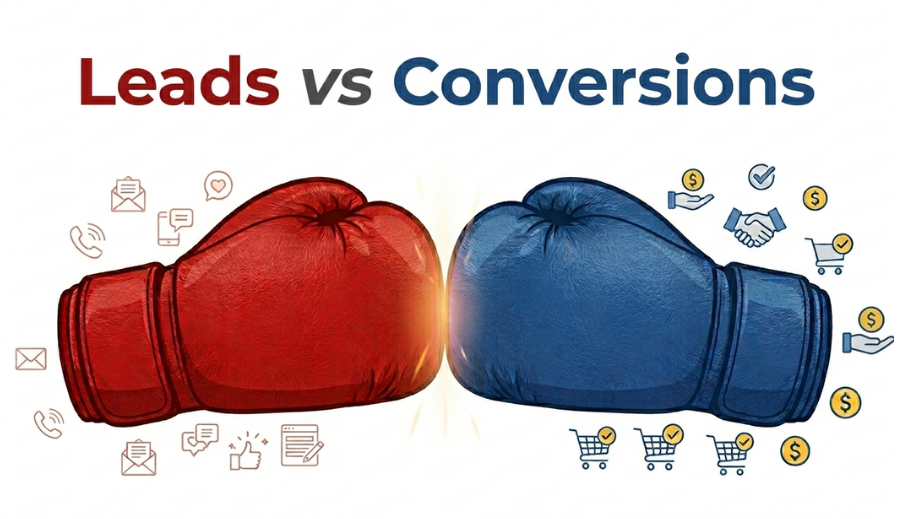
Leads vs Conversions. When it comes to marketing performance, two terms come up again and again: leads and conversions. They’re often used interchangeably, but they’re not the same. Understanding the difference between these two terms will make a big impact on how you grow your business.
A lead is someone who shows interest in your product or service. This could be through filling out a form, signing up for a newsletter, or downloading a resource. A conversion, on the other hand, is when that interest turns into a meaningful action, like making a purchase, booking a service, or committing to your offer.
So why do some leads convert while others don’t? Let’s look at five key factors that make the difference.
1. Quality of Leads
Not all leads are created equal. You might generate hundreds of leads, but if they’re not genuinely interested or don’t fit your target audience, conversions will be low.
High-quality leads come from the right channels and are aligned with your ideal customer profile. When your targeting is accurate, your chances of conversion increase significantly
2. Clarity of Your Offer
People convert when they clearly understand what they’re getting and why it matters. If your messaging is confusing or too vague, potential customers may lose interest.
A strong offer is simple, relevant, and communicates value instantly. It answers the question: “What’s in it for me?”
3. User Experience
Even if someone is interested, a poor experience can stop them from converting. Slow websites, complicated forms, or unclear navigation can create friction.
A smooth, user-friendly journey, from first click to final action plays a major role in turning leads into customers.
4. Trust and Credibility
People are more likely to convert when they trust your brand. This trust can be built through reviews, testimonials, case studies, or a professional online presence.
If a lead feels unsure or skeptical, they’ll hesitate. Building credibility helps reduce that hesitation and increases conversions.
5. Timing and Follow-Up
Sometimes, leads don’t convert simply because the timing isn’t right. This doesn’t mean they lack value; they simply require more nurturing.
Consistent follow-ups, email campaigns, or remarketing can keep your brand top-of-mind until they’re ready to take action.
Bottom Line on Leads vs Conversions.
Leads are the starting point, but conversions are the goal. Focusing only on generating leads without optimizing for conversion can lead to wasted effort and missed opportunities.
By improving lead quality, simplifying your offer, enhancing user experience, building trust, and following up effectively, you can bridge the gap between interest and action.
In the end, it’s not just about getting attention. It’s about turning that attention into results.